Golf Performance and Recovery
Osteopathy tailored to golfers
We are professionals in musculoskeletal health
Performance Optimisation for Golfers
Golf depends on a combination of strength, flexibility, coordination, balance and rotational control to produce a consistent and comfortable swing. The movement begins at the feet and transfers through the ankles, knees, hips and trunk before reaching the shoulders, arms and hands. A restriction or loss of control in one area can influence the rest of the kinetic chain, leading to compensation, reduced efficiency or discomfort.
We assess how your whole body moves rather than focusing only on the area where symptoms are felt. This may include looking at joint mobility, posture, muscle function, balance and movement control, as well as the physical demands created by your swing and the considerable walking involved in a round of golf.
Our golf specific care may combine osteopathic treatment, practical movement advice and targeted rehabilitation exercises. Each plan is adapted to your current ability and individual goals, whether you play socially, compete regularly, are returning after injury or simply want to remain comfortable and confident throughout your game. Our aim is to help you move efficiently, develop physical resilience and continue enjoying golf at your best.
Supporting Your Game
Sport specific injuries
Golf presents its own set of risks, with golfers being particularly prone to various musculoskeletal conditions. A common issue is golfer’s elbow, a tendon injury caused by repetitive stress on the tendons that connect muscles responsible for wrist and elbow movement. This condition can significantly disrupt your game for several months. We employ established techniques and rehabilitation protocols to ensure you return to playing as quickly as possible while optimising your recovery.
Lower limb demands
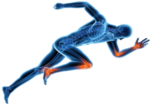
Golf involves considerable walking, often across uneven terrain, together with repeated changes of direction and prolonged standing. These demands place sustained load through the feet, ankles, knees and hips, particularly as fatigue develops during a round. Reduced mobility, strength or balance in one area may affect how forces are distributed through the rest of the lower limb. We assess gait, joint mobility, muscle function and balance to identify concerns such as Achilles tendinopathy or joint discomfort. Treatment and rehabilitation are then personalised to your golfing demands and individual goals.
The kinetic chain
The golf swing relies on coordinated movement through the feet, legs, hips, pelvis, spine, shoulders and arms. Because it is repeated predominantly to one side, differences in mobility, strength or control can develop between areas of the body. These differences may create compensation elsewhere in the kinetic chain, contributing to stiffness, discomfort, reduced balance or inconsistency in the swing. We assess how each region works together and identify restrictions that may be limiting performance. Osteopathic care, practical advice and targeted rehabilitation can then support mobility, control and physical resilience throughout the golfing season.
Care focused on how you play
Keep moving through your golfing season
Book an appointment with the Joint Commitment team to discuss treatment and rehabilitation tailored to your body, your goals and your game.
Book Now